Have you ever walked into your favorite coffee shop, ordered the same drink you get every day, but this time it tastes completely different? Maybe it is too sweet, or the milk is burnt. You feel a little disappointed. You paid the same money, but you didn’t get the same product. Now, imagine if that happened with the brakes on your car or the battery in your phone. In those cases, a mistake isn’t just disappointing; it is dangerous.
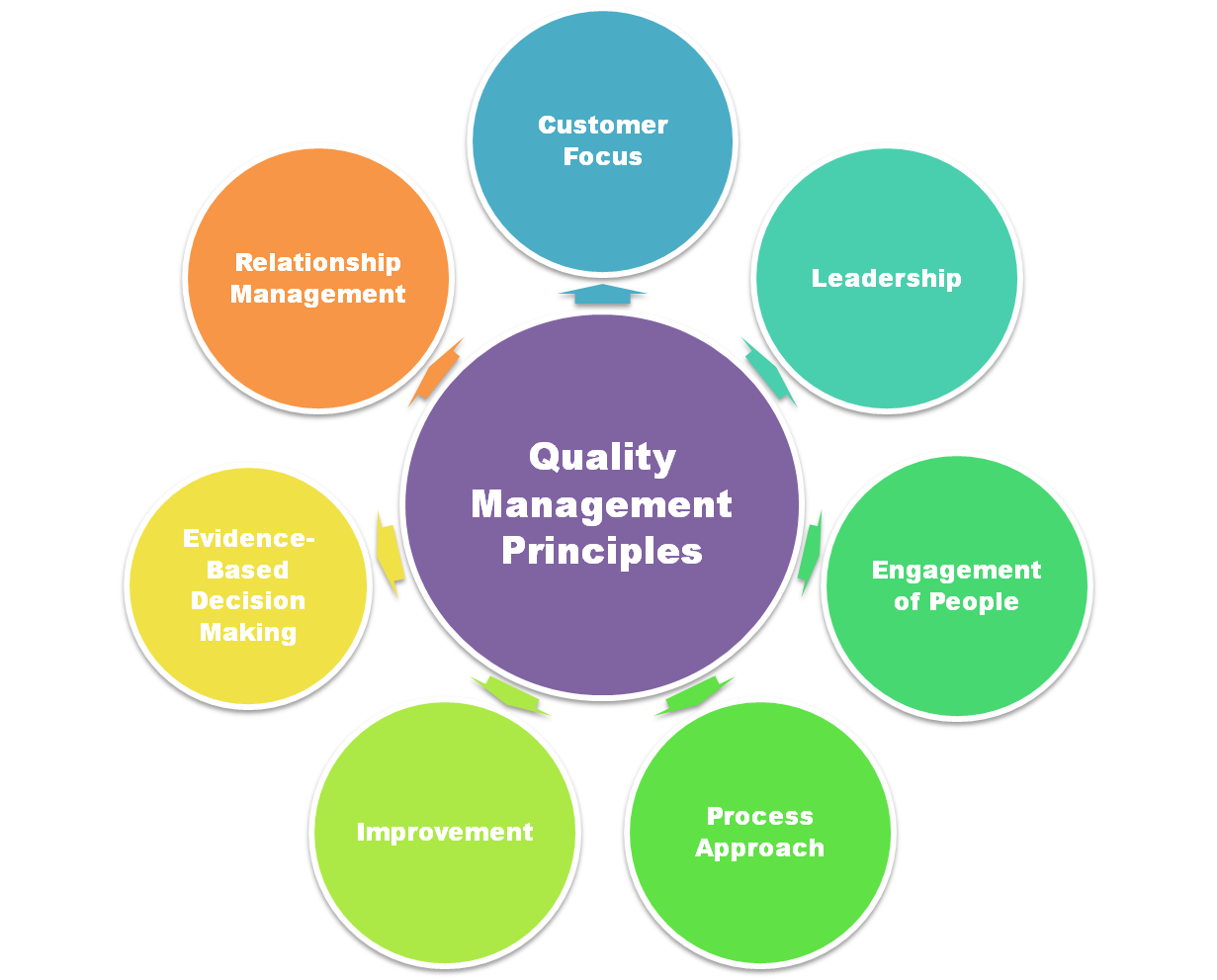
This is why Quality Management and Process Improvement are the most important invisible parts of any business. We often look at the shiny marketing or the charismatic CEO, but the real success of a company happens in the background. It happens when a team decides to stop accepting “good enough” and starts striving for “perfect.” It happens when a manager looks at a confusing workflow and straightens it out. Whether you are running a giant factory, a software company, or a small bakery, the principles of quality are the same. You want to deliver a great product, every single time, without wasting money or energy. This guide is going to walk you through the world of quality. We will strip away the fancy business school jargon and use simple, plain English to explain how you can fix problems, save money, and make your customers happier than ever before.
What is Quality Management and Why Should You Care?
Quality is a word we use a lot, but what does it actually mean? In business, quality doesn’t necessarily mean “luxury.” A $10 watch can have high quality if it tells time perfectly and lasts for years. A $10,000 watch can have low quality if it stops working after a week. Quality simply means “fitness for use.” It means the product does exactly what the customer expects it to do, every single time.
Quality Management is the system you use to ensure this consistency. It is not just checking the product at the end; it is managing the entire journey. Think of it like cooking a specialized dinner. If you just taste the food at the very end and realize it is too salty, it is too late. You have to throw it away. That is waste. Real Quality Management is checking the ingredients before you start. It is making sure the oven is at the right temperature. It is following the recipe exactly. It is tasting the sauce halfway through. By managing the process of cooking, you ensure the result is delicious.
Why should you care? Because bad quality is expensive. Every time you have to redo a task, refund a customer, or throw away a broken product, you are setting money on fire. Good quality management stops that fire before it starts. It builds trust. When customers know they can rely on you, they come back. And in a competitive world, trust is your most valuable asset.
The Hidden Cost of Chaos: Why Bad Processes Lose Money
There is an iceberg in every business. Above the water, you see the obvious costs: salaries, rent, and raw materials. But below the water, there is a massive chunk of hidden costs caused by bad processes. We call this the “Cost of Poor Quality” (COPQ).
Imagine a factory that makes chairs. If a worker assembles a chair incorrectly, they have to take it apart and build it again. That is called “Rework.” You are paying that worker double for one chair. Then there is “Scrap.” If the wood was cut wrong and cannot be used, it goes in the trash. You paid for that wood, but you got zero value from it. Then there are “Returns.” If the bad chair gets to the customer and breaks, you have to pay for shipping to get it back, send a new one, and apologize.
But the biggest cost is the one you can’t see: Opportunity Cost. While your team was busy fixing the broken chair, they could have been building a new one to sell to a new customer. Bad processes act like sand in the gears of your business. They slow everything down. They frustrate your employees because nobody likes doing the same job twice. By ignoring process improvement, you aren’t just losing a few dollars; you are slowing down your entire company’s growth.
The Magic of Continuous Improvement: Getting 1% Better Every Day
When people hear “Process Improvement,” they often think they need to burn everything down and start over. They think they need to buy million-dollar robots or fire everyone and hire new experts. This is a myth. The best improvement happens slowly, quietly, and consistently.
There is a Japanese philosophy called “Kaizen,” which translates to “Change for Good” or “Continuous Improvement.” The idea is simple: don’t try to improve by 100% in one day. Try to improve by 1% every day. Imagine a warehouse where workers have to walk 20 steps to get a box. If you move the box stack closer, so they only walk 15 steps, that doesn’t seem like much. It saves maybe five seconds. But if they grab a box 100 times a day, you just saved 500 seconds. Over a year, that adds up to dozens of hours of paid time saved.
This approach removes the fear of change. It empowers the people doing the work. The janitor knows more about the cleaning process than the CEO. The receptionist knows more about the phone system than the manager. Continuous improvement asks these people, “What is one small thing that annoys you, and how can we fix it?” When you fix a thousand small annoyances, you end up with a world-class business.
The Plan-Do-Check-Act Cycle: A Simple Tool for Big Results
You don’t need a degree in engineering to improve a process. You just need a scientific mindset. The most famous tool for this is the PDCA Cycle, also known as the Deming Cycle. It stands for Plan, Do, Check, Act. It is a loop that never ends.
Plan: Identify the problem. Let’s say your deliveries are always late. Don’t just yell at the drivers. Look at the data. Maybe the route is bad? Maybe the truck is slow? Come up with a theory: “If we use a GPS app, we will save time.”
Do: Test your theory. But don’t change the whole company yet. Run a small experiment. Give the GPS app to one driver for one week. This minimizes risk.
Check: Analyze the results. Did the driver with the app finish faster than the drivers without it? Did it cost more money? Look at the hard numbers. If it didn’t work, that is okay! You learned something.
Act: If it worked, make it the new standard. Buy the app for all the drivers. Then, start the cycle again. What is the next problem we can solve? This cycle stops you from making impulsive decisions based on feelings. It forces you to use logic and evidence. It turns your business into a laboratory where success is proven, not guessed.
Lean and Six Sigma Explained: Removing Waste and Reducing Errors
If you read about quality, you will hear two terms constantly: “Lean” and “Six Sigma.” They sound intimidating, like martial arts for accountants, but the concepts are actually very simple.
Lean is about speed and waste. Imagine a runner trying to win a race. Lean is about putting the runner on a diet. You want to remove all the fat (waste) so the runner is light and fast. In business, “waste” is anything the customer isn’t paying for. Waiting for a slow computer is waste. Moving boxes from one side of the room to the other is waste. Fixing a typo is waste. Lean methodologies look at a process and cut out everything that doesn’t add value.
Six Sigma is about precision and consistency. Imagine an archer trying to hit a target. Six Sigma is about helping the archer hit the bullseye every single time. It uses math to look at variations. If you make 1,000 pizzas, and 50 of them are burnt, you have “variation.” Six Sigma aims to reduce that variation so that 999.999% of the pizzas are perfect. Most modern companies use a mix of both. They want to be fast (Lean) and accurate (Six Sigma). You don’t need to be a certified expert to use these ideas. Just ask yourself: “Is this step necessary?” (Lean) and “Do we do this the same way every time?” (Six Sigma).
Building a Quality Culture: It Starts with Your People
You can have the best charts, the best software, and the best strategy in the world, but if your employees don’t care about quality, you will fail. Quality is not a department; it is a culture. It is how people behave when the boss isn’t watching.
In a bad culture, mistakes are punished. If a worker breaks a machine, they hide it because they are afraid of being fired. The machine stays broken, production slows down, and eventually, a bad product ships. Fear kills quality. In a good culture, mistakes are seen as learning opportunities. If a worker breaks a machine, they immediately tell the manager. The manager doesn’t yell; they ask, “Why did it break? Was the button too confusing? Was the training bad?”
You need to create “Psychological Safety.” Your team needs to feel safe enough to raise their hand and say, “I think there is a problem here.” You should celebrate the person who finds a bug, not the person who hides it. When everyone feels ownership of the final product, quality improves naturally. The person on the assembly line is the expert. Listen to them. Give them the tools to fix things. When they take pride in their work, the customers will feel it.
Listening to the Customer: The True Judge of Quality
Who decides if your quality is good? It isn’t the CEO. It isn’t the engineer. It is the customer. You can build the most technically advanced, durable, and shiny toaster in the world, but if the customer finds it too hard to use, it is a low-quality product.
Quality is subjective. It is based on expectations. If you buy a $5 burger, your expectation is “hot and edible.” If you buy a $50 steak, your expectation is “perfectly cooked and tender.” You must have a feedback loop. You need to talk to your customers constantly. Read the reviews. Send surveys. Listen to the complaints. A complaint is actually a gift. It is a customer telling you exactly where your process is broken.
If 10 people say “The instructions are confusing,” don’t argue with them. Don’t say “They just aren’t reading it right.” Change the instructions. Align your internal definitions of quality with what the customer actually values. Maybe you are spending hours polishing the back of the device, but the customer never looks at the back. Stop polishing. Focus that energy on the screen, which they look at every day. Real quality is delivering value where it matters most to the user.
The Power of Standard Operating Procedures: Doing It Right Every Time
Consistency is the bedrock of quality. The reason McDonald’s is so successful isn’t because they have the best burgers in the world; it is because a Big Mac tastes exactly the same in London, Tokyo, and New York. How do they do this? Standard Operating Procedures (SOPs).
An SOP is simply a set of written instructions. It is the recipe. It tells you exactly how to do a task, step-by-step. Without SOPs, every employee does the job their own way. Bob might tighten the screws by hand, while Sally uses a drill. This creates variation. One day the product is tight, the next day it is loose.
SOPs remove the guesswork. They make training easier because you just hand the new hire the manual. However, SOPs cannot be static documents that sit in a dusty binder. They must be living documents. If you find a better way to do the job, you update the SOP. Creating SOPs can be boring, but it is necessary. It frees up brainpower. If you don’t have to think about how to do the routine tasks, you have more mental energy to solve the complex problems.
Using Data to Make Decisions: Stop Guessing and Start Knowing
In the old days, managers ran businesses on “gut feelings.” They would say, “I feel like sales are down,” or “I think that machine is slow.” In 2026, we don’t need to guess. We have data.
Data is the flashlight that shows you where the dirt is. You need to measure what matters. These measurements are called Key Performance Indicators (KPIs). Don’t just say “We need to work faster.” Measure it. “It takes 12 minutes to pack a box.” Then, make a change. “We moved the tape dispenser.” Measure it again. “Now it takes 11 minutes.” Success! You have proof.
Data removes emotion from the argument. It isn’t about whether the manager likes the employee; it is about what the numbers say. However, be careful not to drown in data. Measure the things that actually impact the customer. Measure defect rates. Measure shipping times. Measure customer satisfaction scores. Visualizing this data is helpful. Put a chart on the wall. If the line is going up, everyone feels good. If the line is going down, everyone knows they need to focus. Transparency with data aligns the whole team toward the same goal.
Conclusion: The Journey to Excellence Never Ends
Quality Management and Process Improvement are not projects with a finish line. You don’t wake up one day and say, “Okay, we are now perfect. We can stop trying.” The world changes too fast for that. Competitors get better. Technology evolves. Customer expectations rise. What was “excellent” five years ago is “average” today.
It is a journey. It is a commitment to waking up every morning and asking, “How can we be a little bit better than we were yesterday?” It can be frustrating at times. You will fix one problem only to find two more. But it is also incredibly rewarding. There is a deep satisfaction in watching a chaotic, stressful workplace turn into a calm, efficient machine.
By focusing on the process, respecting your people, listening to your customers, and using data to guide you, you build a business that is resilient. You build a brand that people trust. And ultimately, you build a legacy of excellence. So, don’t wait for a crisis to start thinking about quality. Start today. Pick one small process, find one small waste, and fix it. That is how the revolution begins.