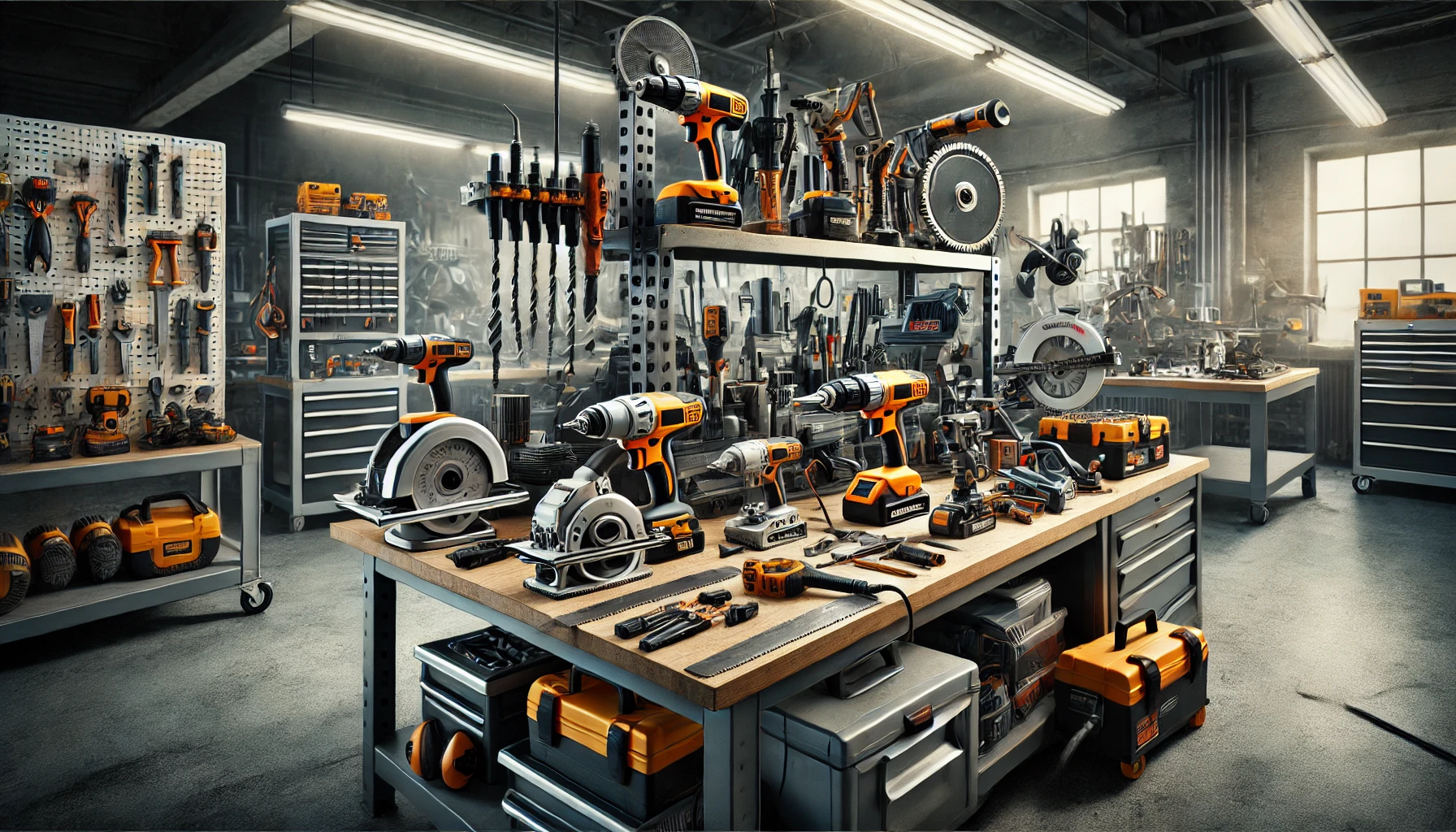
When you walk into a busy workshop or a large factory, the first thing that hits you is the energy. It is a place where things are being made, fixed, and improved. You might hear the hum of a motor, the hiss of compressed air, or the rhythmic banging of a hammer. It feels like a different world, one where raw materials like steel and wood are turned into useful objects. But none of this would be possible without the right equipment. Industrial and workshop equipment is the backbone of our modern life. It builds our cars, fixes our appliances, and creates the furniture we use every day.
For a beginner, looking at a catalog of industrial tools can be overwhelming. There are thousands of machines, weird-looking gadgets, and heavy-duty gear. It is easy to feel lost. However, you do not need to be an engineer to understand how a workshop functions. In 2026, technology has made these tools safer, smarter, and easier to use than ever before. This guide is written to strip away the confusion. We will explore the essential equipment found in modern workshops, explain what it does in simple English, and help you understand why investing in quality gear is the secret to success. Whether you are setting up a small garage shop or managing a large facility, this guide is your roadmap to the tools of the trade.
Understanding the Backbone of the Workshop: Heavy Machinery
The heart of any serious industrial workshop is its heavy machinery. These are the big, stationary beasts that stay in one spot and do the heavy lifting. The two most famous examples are the lathe and the milling machine. If you want to make a round part, like a car axle or a candlestick, you use a lathe. It spins the metal block very fast while a sharp tool shaves layers off it. It is mesmerizing to watch metal peel away like an apple skin.
On the other hand, if you want to make flat surfaces or cut complex shapes, you use a milling machine. Unlike a lathe where the part spins, in a mill, the cutting tool spins. It acts like a high-powered drill that can move sideways, carving out pockets and slots in solid steel. In modern workshops, these machines are often controlled by computers (CNC), meaning you just type in the dimensions and the machine does the rest with incredible precision. These machines are expensive and heavy, but they are the only way to create parts with the accuracy needed for engines, airplanes, and medical devices. Without them, we would still be shaping metal with hand files, which would take forever.
Lifting the Load: Material Handling Equipment Essentials
One of the biggest challenges in any workshop is gravity. Metal, wood, and machinery are heavy. Trying to lift a 500-pound engine block with your bare hands is a guaranteed way to hurt your back. This is why material handling equipment is so vital. It is not just about convenience; it is about safety. The most iconic piece of equipment here is the forklift. It is the workhorse of the factory, zipping around with pallets of goods.
But you don’t always need a giant forklift. For smaller shops, a pallet jack is indispensable. It slides under a pallet and uses a simple hydraulic pump to lift it a few inches off the ground so you can pull it around. Then there are hoists and cranes. An engine hoist, often called a cherry picker, looks like a metal arm on wheels. It allows a single mechanic to lift a heavy car engine out of the hood safely. Inside the workshop, you might see overhead cranes that slide on rails along the ceiling. These are perfect for moving heavy items across a crowded floor without taking up any floor space. Using the right lifting gear turns a dangerous, impossible job into an easy one-person task.
The Lungs of the Shop: Air Compressors and Pneumatic Tools
If electricity is the blood of a workshop, compressed air is its breath. You will find an air compressor in almost every industrial setting, from your local mechanic to giant assembly plants. An air compressor is a machine that sucks in air, squeezes it into a small tank, and stores it under high pressure. When you release this air through a hose, it provides incredible power.
This air powers “pneumatic” tools. Why use air instead of electricity? Because air tools are lighter, simpler, and run cooler. An electric motor can overheat if you work it too hard, but an air tool just gets cold. The most common air tool is the impact wrench—the gun-shaped tool that makes the loud “ugga-ugga” sound when a mechanic changes your tires. It uses bursts of air to deliver massive twisting power. You also have air sanders, which are much lighter than electric ones, and air blow guns for cleaning dust off a workbench. A good compressor system requires maintenance, like draining the water out of the tank to prevent rust, but it is one of the most versatile investments a shop can make.
Joining Metal Together: Welding and Fabrication Gear
Building things often involves sticking two pieces of metal together. Glue doesn’t work well on steel, so we use welding. Welding is the process of melting two pieces of metal so they fuse into one solid piece. It is essentially liquid metal sewing. The equipment for this has changed a lot in recent years. In the past, welders were giant, heavy transformers. Today, they are small, computer-controlled inverters that you can carry with one hand.
There are different types of welders for different jobs. A MIG welder uses a spool of wire that feeds out of a gun automatically. It is like using a hot glue gun for metal and is great for beginners. A TIG welder requires more skill, using a tungsten torch in one hand and a filler rod in the other, but it makes beautiful, precise welds on aluminum and stainless steel. Alongside the welder, you need fabrication tools like plasma cutters. A plasma cutter uses a jet of hot electricity to slice through thick steel like butter. It allows fabricators to cut out complex shapes in seconds. These tools turn raw sheets of metal into frames, tables, and sculptures.
Safety Equipment You Cannot Ignore
A workshop is a dangerous place. There are sparks, flying chips of metal, heavy loads, and loud noises. Safety equipment, or Personal Protective Equipment (PPE), is not optional. It is the only thing standing between you and a trip to the hospital. The most basic requirement is eye protection. Safety glasses today are comfortable and look good, so there is no excuse not to wear them. They protect your eyes from grinding dust and chemical splashes.
Hearing protection is also critical. Industrial machines are loud. Over time, the noise from a saw or a compressor can permanently damage your hearing. Earplugs or noise-canceling earmuffs make the day much more pleasant and protect your ears. For your lungs, you need dust masks or respirators, especially if you are welding or painting. Fumes can be toxic. And let’s not forget your feet. Steel-toed boots protect your toes if you drop a hammer or a heavy part. Modern safety gear is designed to be worn all day without being annoying. Investing in good PPE shows that you respect yourself and your workers. It is the most important “tool” in the shop.
Storage Solutions for a Tidy Workspace
There is an old saying: “A place for everything, and everything in its place.” In an industrial environment, clutter is dangerous. If you are tripping over extension cords or searching for a wrench for twenty minutes, you are losing money and risking injury. This is why storage equipment is a major part of the workshop budget.
Industrial tool chests are the standard for mechanics. These are heavy-duty cabinets with drawers that slide out smoothly even when filled with heavy tools. They often have wheels so you can bring your tools right to the job. For larger items, you need heavy-duty shelving and pallet racks. These are made of steel and can hold thousands of pounds of materials. Small parts like screws and nuts need bin organizers. These are rows of small plastic boxes that let you sort your hardware by size. When a workshop is organized, work flows smoothly. You don’t waste brainpower looking for things; you just reach out and grab what you need. A clean shop is a productive shop.
Power Tools vs Hand Tools: Finding the Balance
Every workshop needs a mix of power tools and hand tools. Power tools provide speed and muscle. A cordless drill can drive a screw in two seconds, while doing it by hand takes twenty. An angle grinder can smooth down a rough weld in moments. In 2026, battery technology has made cordless tools incredible. They are just as powerful as the corded ones but without the tripping hazard of a wire.
However, hand tools still have a vital place. They provide precision and feedback. When you use a manual torque wrench to tighten a bolt on an engine, you feel exactly when it is tight enough. A machine can’t feel that. Hand files, chisels, and hammers allow for delicate adjustments that a power tool might destroy. A good craftsman knows when to use the brute force of a power tool and when to use the finesse of a hand tool. You need both. A workshop with only power tools is clumsy; a workshop with only hand tools is slow. The magic happens in the balance between the two.
The Future of Workshops: Automation and 3D Printing
The industrial world is changing fast. We are seeing high-tech equipment enter even small workshops. The biggest game-changer is 3D printing, also known as additive manufacturing. Instead of cutting material away (like a mill), a 3D printer adds material layer by layer to build a part.
In the past, these were just for plastic toys. Now, industrial 3D printers can print strong carbon fiber or even metal parts. If a plastic knob breaks on an old machine, you don’t have to order a new one and wait weeks. You can just print a replacement in a few hours. This is “digital inventory.”
We are also seeing more automation with “Cobots” (collaborative robots). These are robot arms designed to work safely next to humans. A cobot might do the boring job of loading parts into a machine all day, leaving the human to do the skilled work of inspection and programming. This technology makes workshops more efficient and allows small businesses to compete with big factories. It is an exciting time where digital files become physical objects right before your eyes.
Maintenance and Care for Long Lasting Tools
Industrial equipment is expensive. A good lathe can cost as much as a luxury car. If you want your investment to last, you have to take care of it. Maintenance is the unglamorous part of the job, but it is essential. This means cleaning the machines at the end of every day. Metal chips and sawdust attract moisture, which leads to rust. Rust is the enemy of precision.
Lubrication is also key. Every moving part needs oil or grease. A dry bearing will overheat and fail, potentially destroying the motor. You should have a schedule: check the oil levels on Mondays, grease the fittings on Fridays. It also means inspecting your tools. A cracked grinding wheel can explode and hurt someone. A frayed electrical cord can cause a fire. By spending ten minutes a day on maintenance, you save thousands of dollars in repairs and lost time. Treat your tools with respect, and they will make you money for decades.
Conclusion: Building Your Industrial Legacy
Equipping a workshop is a journey. You don’t need to buy everything at once. Start with the basics: a good set of hand tools, a solid workbench, and proper safety gear. As your skills grow and your projects get bigger, you can add the heavy machinery, the air compressors, and the advanced technology.
The most important thing to remember is quality. Cheap tools break. They strip bolts, they burn out, and they frustrate you. Good industrial equipment is built to last a lifetime. It feels better in your hand and does the job right the first time. Whether you are building furniture, fixing cars, or manufacturing parts for spaceships, the tools you choose become an extension of your hands. They empower you to change the world around you. So, invest wisely, work safely, and enjoy the incredible satisfaction of making things with your own two hands. The workshop is a place of infinite possibility, and with the right equipment, there is nothing you cannot build.