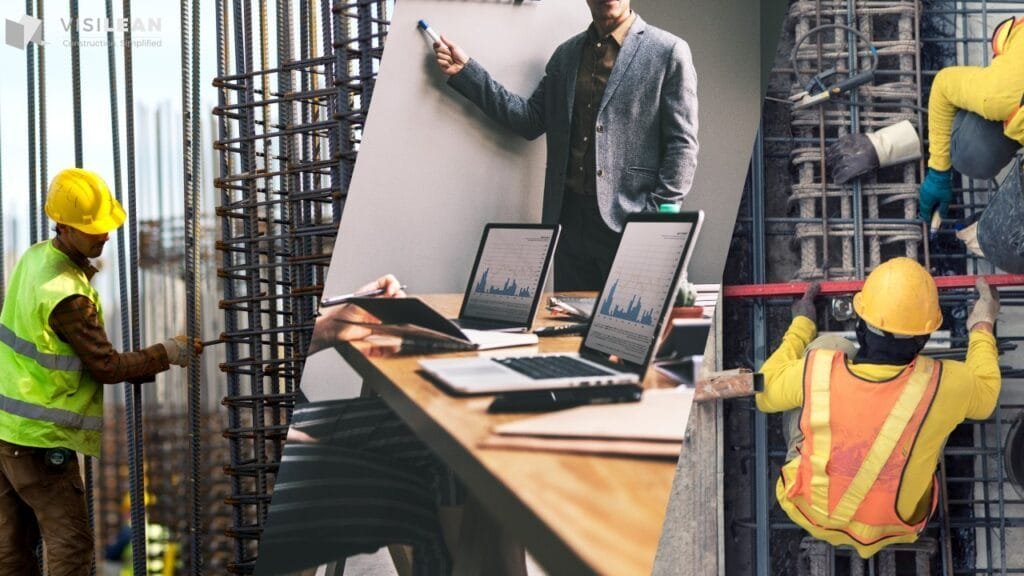
Have you ever walked past a busy construction site and wondered how it all happens? You see giant cranes lifting steel beams, dozens of workers wearing hard hats, trucks pouring concrete, and architects looking at blueprints. It looks like chaos, but it is actually a carefully choreographed dance. Every person knows exactly where to be. Every truck arrives at the exact right moment. Every dollar is accounted for. If it weren’t organized, the building would fall down, the money would run out, or the project would take ten years to finish.
This organization is called Construction Project Management. It is the invisible force that turns a drawing on a piece of paper into a skyscraper, a bridge, or a family home. It is a massive job that requires the skills of a general, a diplomat, and a mathematician all rolled into one. But you don’t need to be an engineer to understand the basics. Whether you are planning to build your own house, manage a small renovation, or just want to understand how our cities are built, this guide is for you. We are going to break down the complex world of construction planning into simple, plain English. We will explore how to manage money, people, and time to build something that stands the test of time.
What is Construction Project Management and Why Does It Matter
Construction Project Management (CPM) is the overall planning, coordination, and control of a project from the beginning to the completion. It is different from other types of management because a construction project has a very specific end point. Once the building is done, the project is over. There is no “next quarter” like in a sales job. You have one chance to get it right.
The project manager (PM) is the captain of the ship. They are responsible for the “Iron Triangle” of construction: Cost, Time, and Quality. Cost means keeping the project within the budget. Time means finishing by the deadline. Quality means making sure the building is safe and looks good. If you pull one corner of the triangle, the others move. If you want it faster (Time), it will cost more (Cost). If you want it cheaper (Cost), the quality might drop. The PM’s job is to balance these three things perfectly. Without this management, projects turn into money pits. We have all heard horror stories of kitchen renovations that were supposed to take two weeks taking six months. That is a failure of project management. Good management ensures that promises are kept and dreams become reality.
The Blueprint of Success The Importance of the Pre Construction Phase
Many people think construction starts when the shovels hit the dirt. But the truth is, the most important work happens long before that. This is the Pre-Construction Phase. This is where you win or lose the war. If you rush this part, you will pay for it later.
During pre-construction, you define the project. You ask the hard questions. What exactly are we building? Is it a two-story house or a three-story house? Does the land have good soil, or is it a swamp? You hire the team. You find the architect to draw the plans and the engineers to make sure the building won’t collapse. You also get the permits. You cannot build anything without permission from the government. This involves a lot of paperwork and waiting.
This is also when you do a “Feasibility Study.” You look at the math. Can we afford this? If the building costs $1 million to build but will only sell for $800,000, you shouldn’t build it. A good project manager is honest here. They will tell the owner, “This idea is too expensive,” and save everyone a lot of pain. Pre-construction is about creating a roadmap. You wouldn’t drive across the country without a map, and you shouldn’t build a house without a plan.
Defining the Scope Knowing Exactly What You Are Building
The number one enemy of any construction project is something called “Scope Creep.” This sounds like a monster, and in a way, it is. The “Scope” is the detailed description of everything that is included in the project. It says, “We will build a 4-bedroom house with a shingle roof and vinyl floors.”
Scope Creep happens when you start adding things later. You decide halfway through that you want a tile roof instead of shingles. Then you want hardwood floors instead of vinyl. Then you want to add a swimming pool. Suddenly, your project costs 50% more and takes three months longer. To prevent this, you must have a “Scope of Work” document. This is a contract. It lists exactly what is happening. It also lists what is not happening. For example, “Landscaping is not included.”
When you or the client wants to change something, you have to do a “Change Order.” This is a formal piece of paper that says, “We are changing the floor to hardwood. This will cost an extra $5,000 and take 3 extra days. Do you agree?” This stops arguments. It makes sure everyone knows the price of their decisions. Keeping the scope locked down is the secret to finishing on time.
Scheduling and Timelines The Art of Predicting the Future
Time is money in construction. Every day a rented crane sits idle, it costs thousands of dollars. Every day the project is late, the owner has to pay interest on the loan without getting any rent money. Therefore, the schedule is the bible of the job site.
Creating a schedule is like a giant logic puzzle. You have to figure out the order of operations. You cannot paint the walls before you put up the drywall. You cannot put up the drywall before you run the electrical wires. You cannot run the wires before you frame the walls. Everything relies on the step before it. This is called “Dependency.”
Project managers use a tool called a “Gantt Chart.” It looks like a calendar with horizontal bars. It shows that the foundation team is working in Week 1 and Week 2. The framing team starts in Week 3. The roofers start in Week 4. The most critical part of the schedule is the “Critical Path.” Imagine a chain of tasks. If the foundation is one day late, the framers are one day late, which makes the roofers one day late. That delay ripples through the whole project. That chain is the Critical Path. The PM watches these tasks like a hawk. If a non-critical task (like planting trees) is late, it doesn’t matter much. But if a critical task is late, the whole project is in trouble.
Budgeting and Cost Control Keeping the Wallet Happy
Construction is expensive. We are dealing with materials like steel, concrete, and copper, which change price every day. We are paying dozens of skilled workers. Managing this massive flow of money is vital.
The budget starts with an “Estimate.” You count how many bricks you need and multiply it by the price of a brick. You count how many hours the electricians will work and multiply it by their hourly wage. But a good estimate is not just a guess; it is based on history and quotes from suppliers. However, you can never predict everything. Maybe you dig a hole and find a giant rock that costs $10,000 to remove. Maybe the price of wood jumps up because of a forest fire. This is why every budget needs a “Contingency Fund.” This is a safety net, usually 10% to 20% of the total budget. It is money set aside for surprises. If you don’t use it, great! You came in under budget. But if you do need it, you won’t go bankrupt.
Cost control means tracking every penny as it is spent. You don’t wait until the end of the project to see if you ran out of money. You check it every week. If you see that you spent too much on concrete, maybe you can save money on the landscaping. It is a constant balancing act to land the plane on the runway without crashing.
Risk Management Preparing for the Storm Before It Hits
A construction site is a risky place. There are physical risks, financial risks, and legal risks. A good project manager is a pessimist. They spend their time asking, “What could go wrong?”
Weather is a huge risk. If it rains for two weeks straight, you can’t pour concrete or paint the exterior. Safety is a risk. Construction is dangerous. If a worker gets hurt, it is a tragedy, and it also shuts down the job site for investigation. Supply chain is a risk. What if the windows you ordered from Italy get stuck on a ship for a month?
Risk Management is the process of identifying these problems before they happen and having a Plan B. If it rains, do we have a tent to cover the work area? If the windows are late, can we install plywood temporarily so we can keep working inside? If the price of copper goes up, did we sign a contract that locks in the price? By thinking about the worst-case scenario, you remove the panic. When a problem happens, you don’t scream; you just open your binder and follow the plan you already made.
Resource Management People Equipment and Materials
You can have the best plan in the world, but if you don’t have the people to build it, nothing happens. Resource management is about making sure you have the labor, the equipment, and the materials ready when you need them.
Labor is the hardest resource to manage. Construction workers are skilled professionals. You can’t just grab anyone off the street to wire a house. You have to schedule them weeks in advance. And you have to make sure they aren’t working on top of each other. You don’t want the painters in the room while the floor sanders are making dust. It’s about “stacking” the trades correctly.
Equipment is also tricky. You don’t buy a crane; you rent it. Renting a crane costs thousands of dollars a day. You need to make sure the crane arrives exactly when the steel beams arrive. If the crane is there but the steel is late, you are burning money. If the steel is there but the crane is late, the workers are standing around doing nothing. Materials management is about “Just-in-Time” delivery. You don’t want all the lumber for the whole house delivered on Day 1. It will take up space, get wet in the rain, or get stolen. You want the lumber to arrive the day before the carpenters start framing. It is a logistical ballet.
Communication is Key Keeping Everyone on the Same Page
A construction project involves hundreds of people. You have the owner, the architect, the engineers, the city inspectors, the general contractor, and dozens of subcontractors (plumbers, electricians, painters). They all speak different languages. The architect talks about “aesthetics.” The engineer talks about “load-bearing capacity.” The owner talks about “money.”
The Project Manager is the translator. They are the hub of the wheel. They have to make sure information flows freely. If the architect changes the drawing to move a wall, the PM has to tell the framer immediately. If the framer builds the wall in the old spot because nobody told him, you have to tear it down. That is a waste of money caused by bad communication.
We use tools to help with this. “Daily Logs” are notes written every day about what happened on site. “RFIs” (Requests for Information) are formal questions. If the plumber looks at the plan and sees a pipe hitting a beam, he writes an RFI asking, “What do I do?” The engineer answers it. This paper trail is vital. If there is a lawsuit later, the person with the best paperwork wins. Regular meetings are also essential. A weekly “site meeting” gets everyone in the trailer to look at the schedule and solve problems face-to-face.
Quality Control and Safety Doing It Right and Keeping It Safe
Speed is important, but not if the building falls down. Quality Control (QC) is the process of checking the work to make sure it meets the standards. This involves inspections. You don’t check the plumbing after the walls are closed up; you check it while the walls are open. You fill the pipes with water and look for leaks. If it leaks, you fix it now. It costs $100 to fix a pipe now. It costs $10,000 to fix it after the house is finished and the water ruins the hardwood floors.
Safety is even more important. The goal of every project is for everyone to go home to their families at night. This means enforcing the rules. Everyone wears a hard hat. Everyone wears safety glasses. If you are on a roof, you wear a harness. The PM has to be the “bad guy” sometimes. They have to yell at workers who are being unsafe. It is better to be annoying than to have an ambulance on site. A safe job site is usually a clean, organized, and efficient job site.
The Closeout Phase Finishing Strong and Handing Over the Keys
The last 5% of a project is the hardest. The big work is done. The building looks finished. But there are a million little details. This is the Closeout Phase. You do a “Punch List” walkthrough. You walk through every room with a roll of blue tape. You stick tape on anything that isn’t perfect. A scratch on the wall? Tape it. A door that squeaks? Tape it. A missing light switch cover? Tape it. The contractor has to fix every single piece of tape before they get their final payment.
You also have to gather the documentation. You need the manuals for the furnace and the dishwasher. You need the warranties for the roof. You need the “As-Built” drawings, which show where the pipes actually are (since they might have moved slightly from the original plan). Finally, you get the “Certificate of Occupancy” from the city. This is the legal document that says the building is safe to enter. Once you have that, you hand over the keys. It is a moment of huge relief and pride. You look at the building and think, “We did that.”
Construction project management is a stressful, chaotic, and difficult job. But it is also incredibly rewarding. You are creating something tangible. You are changing the skyline. You are building the schools where children learn, the hospitals where lives are saved, and the homes where families grow. By planning carefully, communicating clearly, and managing the risks, you turn the dream of a building into a concrete reality.