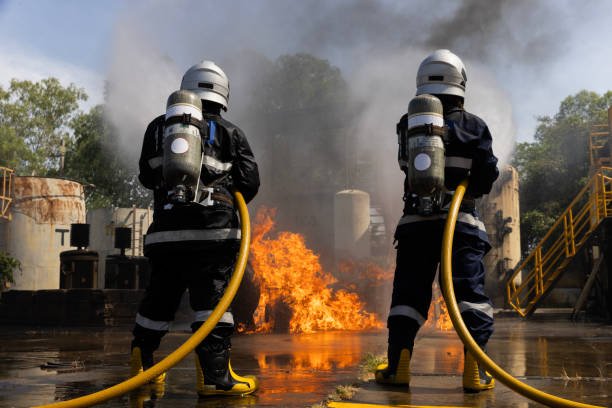
The Ultimate Guide to Fire and Emergency Preparedness: How to Keep Your Family Safe When Disaster Strikes
Imagine for a moment that it is 2:00 AM. You are fast asleep in your warm bed. Suddenly, a loud, piercing screech cuts through the silence. It is your smoke detector. In that moment, your heart starts pounding, and your mind races. Do you know exactly what to do? Do you know where your shoes are? do you know how to get the kids out safely? If the answer is “no” or even “I think so,” then this guide is for you.
We often go through life thinking that bad things only happen to other people. We see fires on the news or hear about floods in distant cities, and we think, “That won’t happen to me.” But the truth is, emergencies can strike anyone, anywhere, at any time. A kitchen fire from a forgotten pan, a sudden severe storm, or a power outage that lasts for days are all real possibilities. Being prepared is not about living in fear or being paranoid. It is about having peace of mind. It is about knowing that if the worst happens, you have a plan to keep yourself and your loved ones safe. This guide is going to walk you through the essential steps of fire and emergency preparedness using simple, plain English. We will cover everything from making a plan to packing a kit, so you can sleep soundly knowing you are ready for anything.
Why Preparedness Is the Best Insurance Policy You Can Buy
We buy insurance for our cars, our homes, and our health. We pay hundreds of dollars a month for a piece of paper that says, “If something breaks, we will pay for it.” But there is one type of insurance that money cannot buy, and that is preparedness. You cannot pay someone to save you in the middle of a crisis if you don’t know what to do. When an emergency happens, seconds count. During a fire, a room can be engulfed in flames in less than three minutes. You do not have time to Google “how to use a fire extinguisher” or argue with your spouse about which exit to use.
Preparedness buys you time. It buys you clarity. When you have a plan, your brain doesn’t freeze up in panic. Instead, muscle memory takes over. You grab the bag, you wake the kids, and you move. This is why emergency preparedness is the ultimate act of love for your family. It is saying, “I value our lives enough to spend a few hours on a Saturday afternoon making sure we are safe.” It is not just about fires; it covers everything from earthquakes and hurricanes to simple things like a water main break that leaves you without tap water for a week. By taking small steps today, you are building a safety net that will catch you when life throws you a curveball.
The First Line of Defense: Smoke Alarms and Carbon Monoxide Detectors
If a fire starts while you are awake, you will probably smell it or see it. But if a fire starts while you are asleep, you are in serious trouble. Smoke actually puts you into a deeper sleep. It contains carbon monoxide and other toxins that numb your brain. You will not wake up from the smell of smoke; you will likely die in your sleep without ever knowing what happened. This is why smoke alarms are non-negotiable. They are the nose that never sleeps.
You need smoke alarms on every level of your home, inside every bedroom, and outside sleeping areas. But simply screwing them to the ceiling isn’t enough. You have to maintain them. Test them once a month by pushing the little “test” button. It is loud and annoying, but that noise is the sound of safety. Change the batteries at least once a year. A good trick is to do it when you change your clocks for Daylight Saving Time.
You also need Carbon Monoxide (CO) detectors. Carbon monoxide is called the “silent killer” because it is an invisible, odorless gas produced by burning fuel (like in your furnace, water heater, or stove). If you have a gas leak or a blocked chimney, CO can fill your house and kill everyone inside within minutes. Put a CO detector near your bedrooms so the alarm will wake you up. If that alarm goes off, do not try to find the leak. Get outside immediately and call the fire department from the fresh air. These small plastic devices are cheap, easy to install, and absolutely vital for survival.
Mastering the Fire Extinguisher: The PASS Method
Every home should have at least one fire extinguisher, preferably one on every floor and definitely one in the kitchen. The kitchen is where most house fires start. Grease fires are particularly dangerous because you cannot put them out with water. If you throw water on burning oil, it explodes into a massive fireball that spreads the fire instantly. You need a specialized tool for the job.
However, owning an extinguisher is useless if you don’t know how to use it. You don’t want to be reading the instructions while your stove is on fire. Use the PASS method to remember what to do: P – Pull the pin. There is a metal ring on the handle that stops it from being squeezed accidentally. Pull it out. A – Aim at the base of the fire. Don’t aim at the flames reaching up to the ceiling. You need to hit the fuel source at the bottom. S – Squeeze the handle. This releases the chemical spray. S – Sweep side to side. Move the nozzle back and forth to cover the entire fire.
Keep an eye on the gauge on your extinguisher. If the needle is in the green, it is good. If it is in the red, it has lost pressure and needs to be replaced. Also, remember that fire extinguishers are for small fires. If the fire is taller than you, or if the room is filling with smoke, do not try to be a hero. Get out, close the door behind you to slow the spread, and call 911. Your life is worth more than your kitchen cabinets.
Creating a Family Escape Plan: Knowing Your Way Out
If your smoke alarm goes off at night, you need to get out fast. But where do you go? If the hallway is blocked by fire, can you get out the window? This is why you need a Family Escape Plan. Walk through every room in your house and find two ways out. The first way is usually the door. The second way might be a window. If you live on the second floor, do you have an escape ladder? These are ropes or chains with steps that you keep under the bed. You throw them out the window and climb down.
Draw a map of your house and mark the exits. Show it to your kids. Make it a game. Ask them, “If there is a monster in the hallway, how do you get out of your room?” Once you are out of the house, you need a “Meeting Place.” This should be a permanent spot a safe distance away from the home, like a big tree in the neighbor’s yard or the mailbox across the street.
The rule is simple: Once you are out, you stay out. Never go back inside for a toy, a pet, or a purse. Firefighters have breathing equipment and protective suits; you do not. Tell your kids that if they get out, they go straight to the tree and wait for you. This stops parents from running back into a burning building to find a child who is already safe outside. Practice this plan twice a year. Do a drill at night so everyone knows what it feels like to wake up and move in the dark.
Building Your Emergency Go-Bag: Essential Supplies for Survival
Sometimes, an emergency forces you to leave your home immediately. This could be a wildfire, a flood, or a hurricane evacuation order. You might have five minutes to leave. You do not have time to pack a suitcase. This is why you need a “Go-Bag” or a “Bug Out Bag.” This is a backpack packed with everything you need to survive for 72 hours.
What goes in the bag? Start with the basics of life: Water and Food. You need water pouches or bottles. You need non-perishable food like energy bars, beef jerky, or dried fruit. Next, think about warmth. Pack a mylar emergency blanket (they are tiny but keep you very warm), a poncho for rain, and a change of clothes.
Then add the tools. You need a flashlight with extra batteries (or a hand-crank one). You need a first aid kit with bandages, antiseptic, and any prescription medications you take. Do not forget important documents. Put copies of your driver’s license, insurance policies, birth certificates, and a list of important phone numbers in a waterproof bag. If your house is destroyed, proving who you are and what you own is the first step to recovery. Finally, add some cash. If the power is out, credit card machines won’t work. Small bills are best. Keep this bag near your front door or in your car so you can grab it and go without thinking.
The Shelter-in-Place Kit: surviving When You Can’t Leave
Not every emergency requires you to leave. Sometimes, the safest place to be is inside your own home. This happens during winter blizzards, massive power outages, or even a pandemic lockdown. In this scenario, you are stuck in your house, possibly without electricity, heat, or running water, for days or weeks. You need a “Shelter-in-Place” supply.
This is different from a Go-Bag because weight doesn’t matter. You can stock up on heavier items. The general rule is to have two weeks’ worth of supplies. Start with water. You need one gallon of water per person per day. That is for drinking and basic hygiene. So, for a family of four for two weeks, you need about 56 gallons. That sounds like a lot, but you can store it in large jugs in the basement or garage.
For food, stockpile canned goods that you actually like to eat. Canned soup, beans, vegetables, and tuna are great. Don’t forget a manual can opener! If the power goes out, your electric one is useless. You also need hygiene supplies. Stock up on toilet paper, hand sanitizer, soap, and trash bags. If the toilet stops flushing, you will need those trash bags for waste disposal. Finally, think about entertainment. If the power is out, the TV and internet won’t work. Have a box of board games, books, and decks of cards to keep morale high, especially if you have children.
Communication Plans: Staying Connected When the Network Fails
We rely on our cell phones for everything. But in a major disaster, cell towers often fail. They get overloaded by everyone calling at once, or they lose power. If you are at work and your kids are at school when an earthquake hits, how do you find them if you can’t call them?
You need a Communication Plan. First, choose an “Out-of-Area Contact.” This is a relative or friend who lives in a different state or city. Local calls might be blocked, but long-distance calls often get through. Everyone in your family should memorize this person’s number. If you get separated, you all call Aunt Mary in Chicago and say, “I’m safe, I’m at the school.” Aunt Mary acts as the central hub to tell everyone where you are.
Text messages are better than voice calls. They use less data and can often squeeze through a busy network when a call cannot. Teach your kids to text, not call, in an emergency. You should also have a physical list of numbers written down in your wallet and your kid’s backpack. We don’t memorize numbers anymore, so if your phone battery dies, you lose your entire contact list. Having a paper backup is crucial. Also, consider buying a battery-powered or hand-crank NOAA weather radio. This will allow you to hear news and instructions from the government even if the internet and cell networks are completely dead.
Special Considerations: Pets, Elderly, and Infants
Standard emergency plans are designed for healthy adults. If your family includes babies, elderly grandparents, or pets, you need to adjust your plan. They cannot just “grab and go.”
For babies, your Go-Bag needs diapers, formula, bottles, and wipes. Remember that stress can affect a mother’s milk supply, so having backup formula is smart even if you breastfeed. For the elderly or disabled, think about mobility. If they use a wheelchair, is your escape route accessible? Do you have extra batteries for their hearing aids? Do you have a cooler for medicines that need refrigeration, like insulin?
Do not forget your pets. In many disasters, people refuse to evacuate because they can’t take their dog, or they are forced to leave them behind. Shelters often do not accept pets for health reasons. Research “pet-friendly” hotels or shelters in advance. Pack a separate bag for your pet with a leash, a muzzle (scared dogs might bite), food, and a photo of the pet in case they get lost. Microchipping your pet is the best way to ensure they are returned to you if you get separated.
First Aid Basics: Treating Injuries Until Help Arrives
In a major emergency, 911 might not answer. Ambulances might be blocked by debris. You need to be your own first responder. You don’t need to be a doctor, but you should know the basics of First Aid.
Take a CPR and First Aid class. The Red Cross offers them in almost every city. Learn how to stop bleeding. This is the most critical skill. If someone cuts an artery, they can bleed to death in minutes. Learn how to apply direct pressure and how to use a tourniquet.
Your First Aid kit should be stocked with more than just Band-Aids. You need gauze pads, medical tape, antibiotic ointment, burn gel, and scissors. Include medications for common issues: ibuprofen for pain, antihistamines for allergic reactions, and anti-diarrheal medicine (bad water often causes stomach issues). Keep a small first aid manual in the kit. In the stress of the moment, you might forget what to do, and having a book to read can calm you down and guide your hands.
Conclusion: Turning Anxiety into Action
Reading about fires and disasters can be scary. It can make you feel vulnerable. But the purpose of this guide is not to scare you; it is to empower you. The feeling of anxiety comes from not knowing what to do. The moment you make a plan, that anxiety turns into confidence.
Start small. You don’t have to do everything this weekend. Buy a smoke detector today. Make an escape plan next week. Build your Go-Bag next month. Preparedness is a lifestyle, not a one-time event. Every step you take makes your family safer.