The Ultimate Guide to Measuring and Testing Equipment: Why Accuracy is the Key to Success
We live in a world that is defined by numbers. When you wake up, you check the time. When you drive, you check your speed. When you cook dinner, you measure the ingredients. We are constantly measuring things to make sure they fit, work, or taste right. But in the world of building, fixing, and creating, measuring isn’t just a habit; it is the most important step of the entire process. Whether you are building a bookshelf, fixing a car engine, or wiring a new light fixture, the difference between a job well done and a disaster often comes down to a fraction of an inch or a single volt of electricity.
This is where measuring and testing equipment comes in. These tools are the eyes and ears of the skilled worker. They allow us to see things our eyes can’t see, like the flow of electricity or the exact thickness of a sheet of paper. For a beginner, the aisle of testing tools at the hardware store can look intimidating. There are laser beams, digital screens, and strange metal clamps. But you don’t need a degree in physics to understand them. In 2026, these tools are easier to use, more accurate, and more affordable than ever before. This guide is going to walk you through the essential tools used to measure our world. We will use simple, plain English to explain what they do, how to use them, and why they are the secret weapon of every professional and serious DIYer.
The Importance of Precision in Everyday Life
Have you ever bought a piece of furniture that wobbled? Or a shirt that was labeled “Large” but fit like a “Small”? That is a failure of measurement. Precision is the quality of being exact. In construction and manufacturing, precision is what keeps buildings from falling down and cars from breaking down. Imagine if the pistons in your car engine were just a tiny bit too big for the cylinders. The engine would seize up instantly. Imagine if the foundation of your house was two inches lower on one side. Your doors would swing open by themselves, and your windows would crack.
Testing equipment is the insurance policy against these mistakes. It allows us to verify our work before it is too late. There is an old saying: “Measure twice, cut once.” This is the golden rule. It is much cheaper to spend five seconds using a tape measure than to spend five hours fixing a piece of wood you cut too short. Measurement gives us confidence. When you know for a fact that a wire is dead because you tested it, you can work safely. When you know a shelf is level because the bubble is centered, you can put your expensive vase on it without worry. Accuracy builds trust, safety, and quality in everything we do.
Length and Distance: Tape Measures, Rulers, and Lasers
The most basic form of measurement is length. How long is it? How wide is it? How far away is it? The tool you choose depends on the scale of the job. For schoolwork or small crafts, a simple ruler is fine. But for building a house or fitting furniture, the tape measure is king.
A tape measure seems simple, but it is a marvel of design. The metal blade is curved so it can “stand out” straight for several feet without bending. This lets you measure a ceiling by yourself. Look at the metal hook on the end. You might notice it wiggles a little bit. That isn’t a defect; it is a feature! The hook slides back and forth exactly the thickness of the metal hook itself. This ensures that whether you are hooking it onto the edge of a board (pulling) or pushing it against a wall (pushing), your measurement starts at exactly zero.
For really long distances, like measuring the size of a room for carpet, we now use Laser Distance Measurers. These are small handheld boxes. You point a red laser dot at the wall, press a button, and the device calculates the distance instantly using light. They are incredibly accurate and save you from having to drag a floppy tape measure across the floor. They can even do math for you, calculating the square footage of a room automatically so you know exactly how much paint to buy.
Precision Engineering: Calipers and Micrometers Explained
Sometimes, a tape measure isn’t accurate enough. If you are working on a car engine or 3D printing a part, you need to measure things down to the thickness of a human hair. This is where precision tools like calipers and micrometers come in. These tools are the symbols of engineers and machinists.
A Vernier Caliper (or a Digital Caliper) is a tool that looks like a ruler with a sliding jaw. It can measure three things. The big jaws measure the outside of an object, like the diameter of a pipe. The small jaws on top measure the inside, like the width of a hole. And a little rod that slides out the back measures depth. Digital calipers are very popular today because they show the number on a screen, so you don’t have to squint at tiny lines.
For even more extreme precision, we use a Micrometer. This tool looks like a C-clamp. You place an object inside the clamp and spin the handle (the thimble) to close it gently. Micrometers are used to measure the thickness of paper, sheet metal, or engine valves. They are so sensitive that even the heat from your hand can expand the metal slightly and change the reading, so pros often handle them carefully. While you might not need one for hanging a picture, they are essential for anyone interested in mechanics or engineering.
Keeping It Straight: Spirit Levels and Laser Levels
We live in a world of gravity. We want our floors to be flat and our walls to be straight up and down. If they aren’t, balls roll off tables and doors swing open. To test this, we use a Level.
The classic tool is the Spirit Level. It is a long bar with a small glass tube inside. The tube is filled with liquid (usually yellow or green alcohol) and has a single air bubble. There are two black lines on the tube. When the bubble sits exactly between the lines, the surface is level. It relies on simple physics: air is lighter than liquid, so it always seeks the highest point. A longer level (like a 4-foot level) is more accurate than a short one because it averages out bumps in the surface.
In modern construction, Laser Levels are taking over. These tools sit on a tripod and spin a beam of light around the room. This creates a perfectly straight red or green line on all four walls at once. If you are hanging kitchen cabinets or installing a drop ceiling, a laser level is a lifesaver. It allows you to align things across a huge room without needing a pencil and a long straight edge. Green lasers are generally better than red ones because the human eye sees green much more clearly, especially in bright rooms.
Electrical Safety: The Magic of the Multimeter
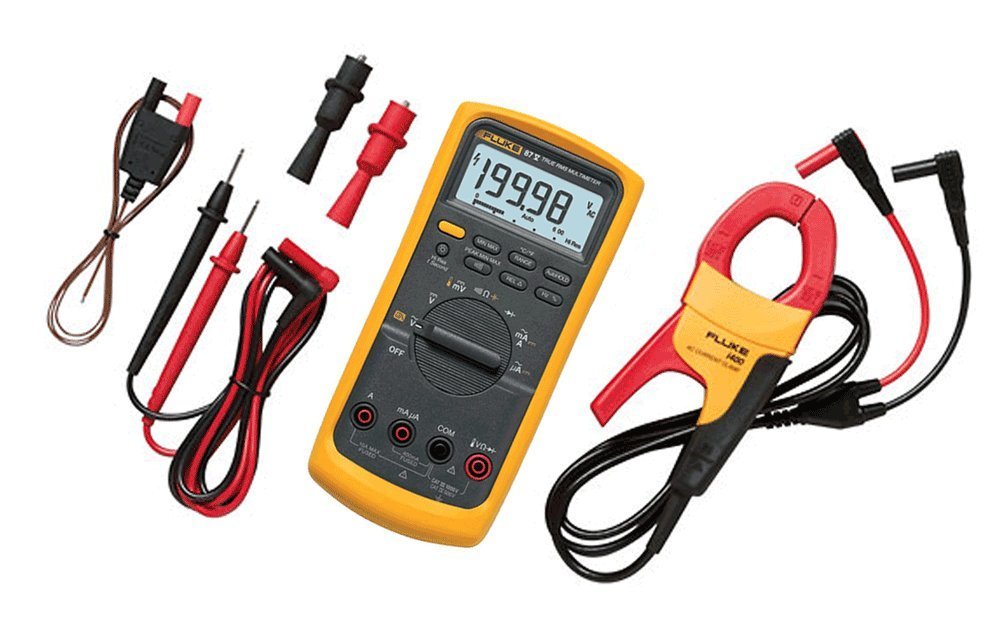
Electricity is invisible, silent, and deadly. You cannot see if a wire is live just by looking at it. This is why electrical testing equipment is the most important safety gear you can own. The must-have tool for every home is a Multimeter.
A multimeter is a digital box with two probes (one red, one black). It is called a “multi” meter because it measures multiple things. The big three are Voltage, Current, and Resistance.
- Voltage: Think of this as electrical pressure. You use this setting to check if a battery is dead or if a wall outlet is working.
- Current (Amps): This is the flow of electricity. You use this to see how much power a device is using.
- Resistance (Ohms): This measures how hard it is for electricity to flow. It is used to check for broken wires.
One of the most useful features for beginners is the “Continuity Test.” When you touch the probes together, the meter beeps. This allows you to check if a fuse is blown or if a lightbulb is burnt out. If it beeps, the path is clear. If it is silent, the path is broken. Before you ever touch a wire to replace a light switch, use a multimeter (or a simple non-contact voltage tester) to make sure the power is truly off. It is a small step that saves lives.
Temperature and Pressure: Gauges for Heat and Air
Not everything we measure is solid. We also need to measure liquids and gases. In your home, your car, and your body, temperature and pressure are critical vital signs.
For temperature, we have moved far beyond the old glass thermometers filled with mercury. Today, Infrared Thermometers (or laser thermometers) are very popular. You look like you are holding a radar gun. You point it at a pizza stone, an engine block, or an air conditioning vent, and pull the trigger. It reads the thermal radiation bouncing off the object and gives you the temperature instantly without touching it. This is great for finding drafty windows in your house or checking if your car is overheating.
Pressure gauges are vital for anything involving air or water. The most common one you know is likely the tire pressure gauge for your car. Keeping your tires at the right pressure (measured in PSI) keeps you safe and saves gas. In your home, you might have a pressure gauge on your boiler or water tank. If the pressure gets too high, pipes can burst. If it gets too low, you get no water in the shower. These gauges usually have a dial face with a needle. A simple glance can tell you if a system is healthy or dangerous.
Weighing Scales and Force Measurement
Weight is another fundamental measurement. In the kitchen, we weigh flour for baking. In the bathroom, we weigh ourselves. In industry, weighing is how we buy and sell goods. A “ton” of gravel or a “pound” of gold must be exact.
Modern scales use something called a “Load Cell.” When you stand on a digital scale, you are slightly bending a metal bar inside. The scale measures how much that bar bends electrically and converts it into a number on the screen. It is incredibly robust and accurate.
But we also measure force. A Torque Wrench is a special tool used by mechanics. When you tighten the lug nuts on your car wheel, they need to be tight, but not too tight. If they are too loose, the wheel falls off. If they are too tight, the bolt snaps. A torque wrench allows you to set a specific limit (like 100 foot-pounds). When you pull the wrench and hit that limit, it makes a “click” sound and stops you from turning any further. This ensures that every bolt is tightened to the perfect tension, keeping machines safe and reliable.
The Rise of Digital vs Analog Tools
If you go to buy tools today, you will face a choice: Analog (dial/needle) or Digital (screen). Which is better?
Analog tools, like a classic clock face or a ruler, are great because they don’t need batteries. They are often tougher and can handle being dropped. You can also see “trends” easier. For example, seeing a needle swing from low to high gives you a feel for how fast something is changing. However, they can be hard to read. You have to squint to count the little lines between the numbers.
Digital tools are easier to read. The screen says “12.54” clearly. There is no guessing. They can also do cool tricks, like saving the measurement or converting inches to millimeters with the press of a button. However, they rely on batteries. If your battery dies in the middle of a job, you are stuck. For most homeowners, digital is the way to go because it removes the error of misreading the lines. But pros often keep an analog backup just in case.
Care and Calibration: Keeping Your Tools Accurate
A measuring tool is useless if it lies to you. If your tape measure is stretched or your level is bent, your whole project will be wrong. Taking care of these precision instruments is just as important as buying them.
Rule number one: Keep them clean and dry. Moisture causes rust, and rust ruins accuracy. If your calipers get wet, dry them immediately and oil them lightly. Rule number two: Don’t drop them. Precision tools are often delicate. Dropping a micrometer or a laser level can knock the internal sensors out of alignment. Treat them like you would treat your phone. Rule number three: Calibration. This is the process of checking a tool against a known standard. For a professional, this means sending the tool to a lab once a year. For a homeowner, it means simple checks. You can check your level by putting it on a table, looking at the bubble, then flipping it 180 degrees. If the bubble is in the exact same spot, it is accurate. If the bubble moves, the level is bad. You can check a scale by weighing a 5-pound dumbbell. If it says 5.0, you are good.
Conclusion: Why Accuracy is the Key to Success
Measuring and testing equipment might not seem as exciting as a power saw or a hammer. They don’t make loud noises or smash things. But they are the quiet heroes of the toolkit. They provide the roadmap for your work. Without them, we are just guessing, and guessing leads to crooked shelves, burnt-out wires, and broken engines.
Investing in decent measuring tools is an investment in your own skills. It teaches you to slow down and observe. It teaches you the language of the physical world—volts, inches, degrees, and pounds. When you finish a project and everything fits perfectly, or when you find that electrical fault and fix it safely, you get a deep sense of satisfaction. That confidence comes from knowing the facts. So the next time you open your toolbox, give a little respect to the humble tape measure and the multimeter. They are the tools that make the modern world possible. They turn your ideas into reality, one precise measurement at a time.