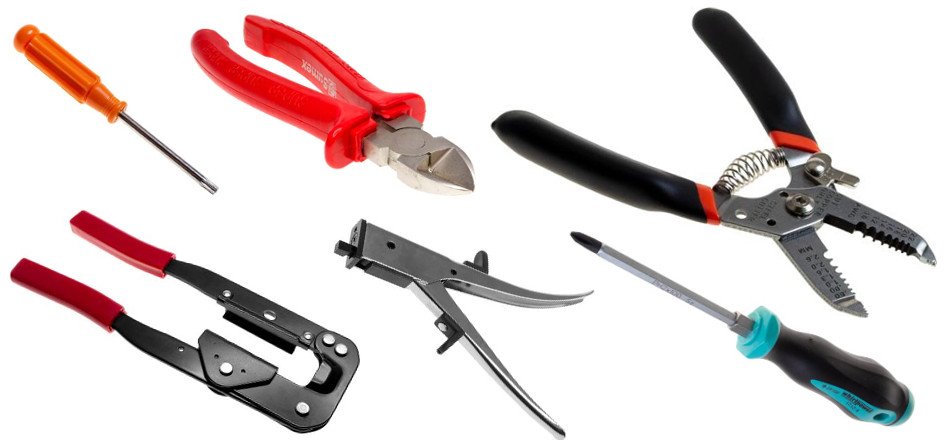
The Ultimate Guide to Hand Tools: Building Your World One Turn at a Time
We live in a high-tech world filled with smartphones, self-driving cars, and voice-activated assistants. Yet, when the doorknob falls off or you need to put together that new bookshelf, you don’t reach for an app. You reach for a screwdriver. Hand tools are the timeless extensions of the human hand. They are the fundamental instruments that allow us to shape, fix, and build the world around us. For thousands of years, long before electricity was even a spark in someone’s imagination, humans were using hammers, saws, and chisels to create civilizations.
Today, even with power drills and laser cutters available, hand tools remain essential. There is a specific kind of magic in using them. They offer a connection to the material that a buzzing power tool simply cannot match. When you use a hand saw, you feel the grain of the wood. When you use a wrench, you feel the precise moment the bolt tightens. This guide is a celebration of these trusty companions. Whether you are a total beginner looking to buy your first toolkit, a new homeowner trying to hang a picture frame, or just someone who appreciates the feeling of a job well done, this post is for you. We will strip away the jargon and explore the must-have tools, how to use them safely, and why quality matters more than quantity.
The Hammer: More Than Just Hitting Things
The hammer is perhaps the oldest tool in human history. It seems simple: a heavy metal head on a handle, used to hit things. But if you have ever bent a nail sideways or smashed your thumb, you know there is an art to it. The most common type is the “Claw Hammer.” It has a flat face for driving nails in and a curved claw on the back for pulling them out. It is the best friend of carpenters and DIY enthusiasts alike.
When choosing a hammer, balance is everything. Pick it up in the store. It shouldn’t feel too heavy in the nose or too light in the handle. A 16-ounce hammer is the standard “Goldilocks” weight—not too heavy for small nails, but heavy enough to drive a big one. When you swing, hold the handle near the end, not up by the head. This gives you leverage. Let the weight of the hammer do the work. You are just guiding it. Keep your eye on the nail head, not the hammer. It takes practice, but once you find your rhythm, the “thwack-thwack-thwack” of driving a nail flush is incredibly satisfying.
Screwdrivers: The Keys to the Mechanical Kingdom
If the hammer is for brute force, the screwdriver is for precision. It is the tool that holds the modern world together. Look around your room right now. The light switch cover, the remote control, the handle on your drawer—they are all held in place by screws.
You really only need to know about two main types to survive: Flathead and Phillips. The Flathead (or Slotted) has a single flat blade. It is the oldest type, often found on light switch plates and antique furniture. The Phillips looks like a plus sign (+). It was designed to prevent the driver from slipping out, which happens a lot with flatheads.
However, a word of warning: never use the wrong size. If you use a tiny screwdriver on a big screw, you will strip the head. This means you chew up the metal grooves until the screw becomes a smooth, useless circle that you can’t get out. Always match the tip to the screw perfectly. A good set of screwdrivers will have magnetic tips, which is a lifesaver when you are trying to reach a screw into a deep, dark hole without dropping it.
Measuring Tape: The Rule of Twice and Once
“Measure twice, cut once.” It is the most famous saying in construction for a reason. You can’t put wood back after you cut it off. The tape measure is the judge and jury of your project. It tells you the truth about space.
A good tape measure should be sturdy. The metal tape (called the blade) should be stiff enough to stick out about seven or eight feet without bending and collapsing. This allows you to measure a wall or a ceiling by yourself. Look at the little metal hook on the end. You might notice it wiggles back and forth a tiny bit. That isn’t a defect; it is a design feature! It moves exactly the thickness of the hook itself. This ensures that whether you are hooking it onto the edge of a board (pulling) or pushing it against a wall (pushing), your measurement starts at exactly zero.
Learning to read the little lines is a superpower. The big numbers are inches. The line in the middle is a half-inch. The smaller ones are quarters, eighths, and sixteenths. Take ten minutes to learn which is which. It will save you hours of frustration when you are trying to figure out if your couch will fit through the door.
Pliers: The Grip of Steel
Sometimes, your fingers just aren’t strong enough. You need to grab a stuck nut, twist a wire, or pull a staple out of a wall. This is where pliers come in. They are essentially a pair of metal fingers with super strength.
The most versatile type is the “Slip-Joint Plier.” These have a pivot point that can slide between two positions, allowing the jaws to open wide for big things or close tight for small things. They have jagged teeth to grip slippery metal. Then you have “Needle-Nose Pliers.” These have long, skinny jaws that come to a point. They are perfect for reaching into tight spaces, like fishing a dropped ring out of a drain or bending wire for jewelry.
Another essential is the “Locking Plier,” often called by the brand name Vise-Grip. These have a bolt on the handle that locks the jaws shut. You can clamp them onto a rusted bolt and let go, and they will hang on tight while you use both hands to twist. They are like having a helper holding the item for you. Just be careful—pliers have teeth, and they can leave scratches on nice surfaces. If you are grabbing a chrome faucet, wrap a cloth around it first.
Wrenches: Turning Bolts with Power
Wrenches (or spanners, if you are British) are designed for one thing: turning nuts and bolts. Unlike pliers, which squeeze, wrenches fit perfectly around the hexagonal shape of a bolt head. This allows you to apply huge amounts of force without slipping and rounding off the corners.
The “Adjustable Wrench” (often called a Crescent Wrench) is the most popular for homeowners. It has a little wheel you spin with your thumb to open or close the jaws. This means one tool fits almost any bolt. It is great for assembling furniture or tightening a loose bicycle seat. However, because it has moving parts, it can loosen up while you work.
For serious work, like fixing a car or a lawnmower, you want “Combination Wrenches.” These are solid bars of steel with an open “C” shape on one end and a closed ring (box end) on the other. They come in specific sizes, like 1/2 inch or 10mm. Because they fit exactly, they are safer and stronger. Always pull a wrench toward you; never push it away. If the nut suddenly breaks loose while you are pushing, your knuckles will smash into the engine block. If you are pulling, your hand just flies back safely.
The Utility Knife: The Sharpest Tool in the Shed
You might know it as a box cutter or a Stanley knife. Whatever you call it, the utility knife is the unsung hero of the toolbox. It is simply a razor blade in a handle, but it cuts almost everything: cardboard, carpet, drywall, plastic packaging, and rope.
Safety is paramount here. A dull blade is actually more dangerous than a sharp one. If the blade is dull, you have to push harder. When you push hard, the knife can slip and slice across your work (or your leg). A sharp blade glides through effortlessly. Most utility knives store extra blades inside the handle. Change them often.
Modern utility knives usually have a retractable blade. When you aren’t using it, slide the button back to hide the razor. Never leave an open knife on the floor or a table. It is invisible until you step on it. When you are cutting, always cut away from your body. If the knife slips, it should fly into empty air, not into your stomach.
The Level: Keeping the World Straight
Have you ever hung a picture frame, stepped back, and realized it was crooked? It is annoying. The human eye is pretty good, but it isn’t perfect. A level is a tool that uses gravity to tell you what is perfectly horizontal (level) and perfectly vertical (plumb).
The classic “Spirit Level” is a bar with a small glass vial inside. The vial is filled with liquid (usually green or yellow alcohol) and has a single air bubble. There are two black lines on the glass. When the bubble sits exactly between those two lines, your shelf is straight. It is simple, unhackable physics.
Levels come in all sizes. A small 9-inch “Torpedo Level” fits in your pocket and is great for small pictures. A 2-foot or 4-foot level is needed for bigger jobs like hanging cabinets or building a deck. A level surface ensures that balls don’t roll off tables and doors don’t swing open by themselves. It brings a sense of order and professionalism to your work.
Saws: Cutting Wood with Muscle
If you need to cut a piece of wood and you don’t have a power saw, don’t worry. People built cathedrals and ships with hand saws. They are quiet, safe, and great exercise. The standard “Handsaw” has a wide, flexible blade and a big handle. It cuts on the push stroke (usually) or both strokes.
To use it, draw a line where you want to cut. Place the saw blade on the waste side of the line (remember, the saw blade has thickness, so if you cut right on the line, your board will be too short). Use your thumb to guide the start of the cut—carefully! Draw the saw back slowly a few times to make a groove. Then, start sawing with long, smooth strokes.
Don’t press down hard. Let the sharp teeth do the cutting. If you force it, the saw will bend and get stuck. Keep your elbow tucked in and your eye looking down the back of the saw to keep it straight. The rhythm of sawing is almost meditative once you get the hang of it. For smaller, finer cuts, use a “Hacksaw” (for metal or plastic) or a “Coping Saw” (for curves).
Hex Keys: The Furniture Assembler’s Best Friend
If you have ever bought furniture from IKEA, you know what a Hex Key is. Also called an Allen Wrench, it is a small L-shaped bar of metal with a six-sided (hexagonal) tip.
Manufacturers love these because the screw heads are hard to strip, and the tool is cheap to include in the box. However, the free ones you get with the furniture are usually tiny and uncomfortable. If you build a lot of furniture, do yourself a huge favor and buy a proper set of Hex Keys.
A good set comes in a folding handle, like a Swiss Army knife, or as individual keys with comfortable rubber T-handles. This gives you much more turning power and saves your thumbs from getting sore. They come in Metric (millimeters) and SAE (inches). Make sure you have both sets, because trying to jam a metric key into an inch screw will just ruin both.
Caring for Your Tools: Rust Never Sleeps
Tools are made of metal, and metal wants to rust. Moisture is the enemy. If you leave your tools in a damp basement or out in the rain, they will turn orange and stiffen up within days.
The best way to protect your investment is simple: keep them dry and clean. After a big project, wipe your tools down with a rag. If they are dirty or greasy, use a little cleaner. Once or twice a year, put a few drops of light machine oil on the moving parts of your pliers and adjustable wrenches. Rub a thin layer of oil on the metal blades of your saws and hammers. This creates a barrier against the oxygen in the air.
Storage matters too. throwing everything into a messy bucket is a recipe for dull edges and lost tools. A toolbox with drawers or a pegboard on the wall keeps things organized. When you open your toolbox and see everything shiny, sharp, and in its place, it makes you want to build something. It turns a chore into a hobby.
Conclusion: The Joy of Fixing It Yourself
There is a unique satisfaction that comes from using hand tools. It is the feeling of self-reliance. When the sink leaks, you don’t have to panic and call a plumber for $200. You can grab your wrench, tighten the nut, and fix it in two minutes. When you want a new coffee table, you don’t have to buy a cheap particle-board one. You can buy some wood, grab your saw and hammer, and build something solid that will last for years.
Hand tools connect us to the physical world. They teach us patience, physics, and problem-solving. They remind us that we have the power to change our environment. You don’t need a garage full of expensive equipment to start. A simple hammer, a screwdriver, a tape measure, and a pair of pliers can solve 90% of the problems in a typical home. So go ahead, build your kit. Learn how to use them. And the next time something breaks, don’t worry. You have the tools to handle it.