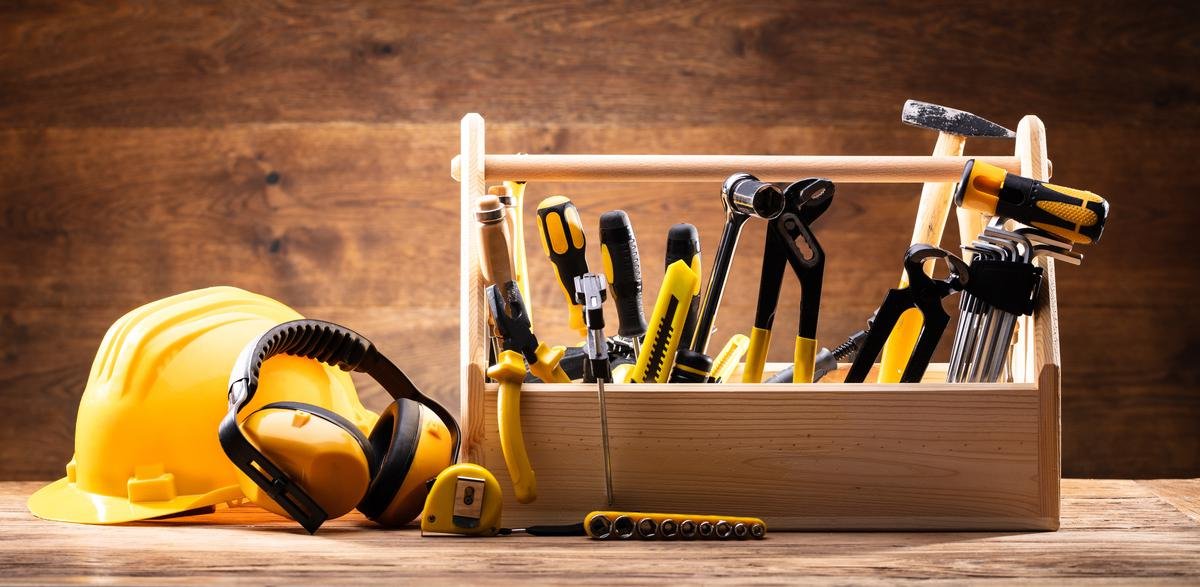
Essential Tools Every Workshop Should Have
There is a profound sense of satisfaction that comes from building something with your own two hands. Whether it is a piece of heirloom furniture, a simple shelf, a repaired appliance, or a custom piece of art, the act of creating or fixing bridges the gap between an idea and reality. At the heart of this process is not just skill or patience, but the tools that act as an extension of the maker’s will. A workshop, regardless of its size—be it a sprawling three-car garage or a compact corner of a basement—is a sanctuary of potential. But that potential can only be fully realized if it is equipped with the right instruments. Walking into a workshop that is missing essential tools is like trying to write a novel without a pen; the ideas are there, but the means to execute them are not. For the beginner looking to set up their first space or the seasoned hobbyist looking to fill in the gaps, understanding the core categories of tools is the first step toward turning a collection of wood and metal into something functional and beautiful.
The Philosophy of Tool Selection
The selection of tools for a workshop should be guided by the principle of versatility and necessity. It is easy to be seduced by specialized, single-purpose gadgets that look appealing on a store shelf, but the backbone of any effective workshop is a collection of high-quality, foundational tools that can handle the vast majority of tasks. This means investing in tools that are durable, reliable, and comfortable to use. The old adage “buy once, cry once” holds true in the workshop; a cheap tool that breaks in the middle of a project or strips a screw head is not a bargain—it is a frustration. A well-equipped workshop is an ecosystem where measuring, cutting, shaping, and fastening work in harmony. Therefore, we must start at the very beginning, with the tools that ensure everything else is done correctly.
The Measuring and Marking Fundamentals
You cannot cut a board to the correct length if you cannot measure it accurately, and you cannot drill a hole in the right spot if you cannot mark it precisely. A reliable 25-foot tape measure with a sturdy lock is the workhorse of the shop, but it must be accompanied by a high-quality combination square. This single tool allows you to check for squareness, mark precise 90-degree and 45-degree angles, and even serve as a depth gauge. For longer cuts, a straight edge or a level that also functions as a ruler is indispensable. Furthermore, marking knives are superior to pencils for creating a crisp, fine line that a saw blade can follow exactly, preventing the tear-out that a fat pencil line can cause. These precision tools set the stage for everything that follows, ensuring that your project starts on the right foot.
Cutting and Shaping: The Power Tool Core
Once the planning and measuring are complete, the real transformation begins with the removal of material, which falls under the category of cutting and shaping. For the vast majority of workshop projects, especially those involving wood, the circular saw is the undisputed king of portability and versatility. Paired with a good straight-edge guide, it can break down full sheets of plywood with the accuracy of a massive panel saw. However, for the stationary heart of the shop, nothing beats the table saw. It is arguably the most important power tool in a woodworking shop, capable of ripping lumber to width, cross-cutting, and, with the right jigs, cutting joinery like dadoes and rabbets. Safety is paramount with a table saw, so a good push stick and a feather board are just as essential as the saw itself. For curved cuts and intricate shapes, a jigsaw with variable speed control is the go-to tool, able to navigate tight radii in wood, plastic, and even thin metal. But cutting is only half the story; shaping the material to its final form requires smoothing and leveling. This is where the random orbital sander becomes a hero. Unlike simple palm sanders that can leave swirl marks, a random orbital sander moves in a random pattern, erasing its own scratches and leaving a smooth surface ready for finishing. For those working with rough lumber, a hand plane—whether a low-angle block plane for end grain or a No. 4 smoothing plane for general surfacing—is a non-negotiable tool that connects you directly to the material, shaving off whisper-thin layers to create a surface that machines simply cannot replicate.
The Art of Fastening and Assembly
With the pieces cut and shaped, they must be joined together, which brings us to the realm of fastening and assembly. In the modern workshop, the drill/driver is the single most-used power tool. Having two is even better—one dedicated to drilling pilot holes with a drill bit, and the other fitted with a driver bit to sink screws. A 12-volt or 18-volt brushless lithium-ion model offers plenty of power for almost any task without tiring your wrist. But screws are not the only method of assembly. For ultimate holding power and a clean look, glue is often the preferred method, but it requires clamping pressure to create a bond stronger than the wood itself. Therefore, a collection of clamps is vital. You can never have too many clamps.
A mix of bar clamps for long panels, quick-grip clamps for light-duty holding, and pipe clamps for large assemblies will cover most situations. For projects made of metal or when screws simply won’t do, drilling precise holes is critical. While a standard power drill can handle most tasks, a drill press brings a level of accuracy that is impossible to achieve freehand, allowing you to drill holes at perfect 90-degree angles every time. Finally, for joining wood in a way that is both incredibly strong and visually appealing (by hiding the fasteners), a pocket hole jig has become an essential tool for the modern workshop. This simple device allows you to drill angled holes that let screws pull two pieces of wood together tightly, making furniture building accessible to almost anyone.
Workholding and Stationary Essentials
Beyond the portable power tools, a workshop truly comes into its own with the inclusion of stationary tools and the indispensable category of work holding. The workbench itself is the most important tool in the shop. It is the foundation upon which all work is done. A heavy, sturdy workbench with a flat top and a reliable vise will not move or shake as you plane a board or hammer a chisel. It provides a stable platform that makes your work more accurate and safer. You can build your own or invest in a high-quality commercial model, but the key is mass and rigidity.
Attached to that bench, or standing alone, a bench grinder is essential for keeping your edge tools—chisels, plane irons, and drill bits—sharp. A dull tool is a dangerous tool, as it requires excessive force and is prone to slipping. Keeping a keen edge on your cutting instruments is a fundamental workshop discipline. For metalworkers or anyone who needs to cut steel stock, a portable band saw or an angle grinder is a transformative tool. The angle grinder, in particular, is a brutal and effective tool for cutting, grinding, and polishing metal, though it demands the utmost respect and proper safety gear, including a face shield and heavy gloves.
Non-Negotiable Safety Equipment
And speaking of safety, it is not an afterthought but a core category of essential workshop equipment. Safety glasses should be worn every single time you enter the shop and power on a tool. Hearing protection is non-negotiable when using loud machinery like table saws or planers. A good dust collection system, whether a shop vacuum connected directly to your sander or a more elaborate dust collector for stationary tools, is not just about keeping the shop clean; it is about protecting your lungs from fine particulate matter that can cause serious long-term health issues. A fire extinguisher rated for electrical and combustible fires must be mounted within easy reach of the workshop door.
Organization and The Modern Workshop
In the digital age, the workshop is no longer just about physical tools. The integration of smart technology and the absolute necessity of good lighting and organization have transformed how we work. Task lighting is critical; you cannot make precision cuts or read a tape measure accurately in a dimly lit space. LED shop lights provide bright, cool illumination that reveals shadows and details. Furthermore, the way you organize your tools directly impacts your workflow. A place for everything and everything in its place is not just a quaint saying; it is a productivity principle. French cleats on the wall offer a customizable storage system for hanging tools, keeping them visible and accessible.
Pegboards, tool chests with ball-bearing slides, and shelving units all contribute to a workshop where you spend less time searching for the 10mm socket and more time actually building. In the realm of smart tools, a laser distance measurer can be a huge timesaver for long-distance layout, and a digital angle gauge or inclinometer can give you precise readouts when setting up your table saw blade or miter saw. Even a simple Wi-Fi enabled thermometer or hygrometer can help you monitor the conditions in your shop, which is crucial for wood movement and the proper curing of finishes and glues. These modern additions complement the traditional tools, creating a hybrid workspace that leverages the best of both worlds.
Building Your Personal Arsenal
Ultimately, building a workshop is a personal journey. The tools you acquire will reflect the projects you love to build. A dedicated woodworker will invest heavily in jointers and planers, while an automotive enthusiast will prioritize impact wrenches and floor jacks. However, the tools discussed here—the measuring tools, the cutting and shaping tools, the fastening and assembly tools, the stationary and safety equipment, and the organizational systems—form the universal skeleton upon which any specific discipline can be built. They are the instruments that empower us to be creators rather than just consumers. Starting with these essentials ensures that you are never truly stuck. When you have a sharp chisel, a reliable drill, a sturdy workbench, and a good clamp, you have the ability to solve a surprising number of problems and bring a wide array of ideas to life. So, whether you are just laying out the footprint of your first workshop or looking to refine an existing space, focus on the fundamentals. Invest in quality where it counts, keep your tools sharp and organized, and always, always prioritize safety. The reward is a space that is not just a room full of tools, but a genuine sanctuary for creativity, productivity, and the timeless satisfaction of making things with your own hands.